
Mapping experiences of awe
Awe happens in specific places: a park, a street corner, inside a building, or during a conversation. Mapping awe is a simple research tool used to capture where people experience awe in their everyday environments.
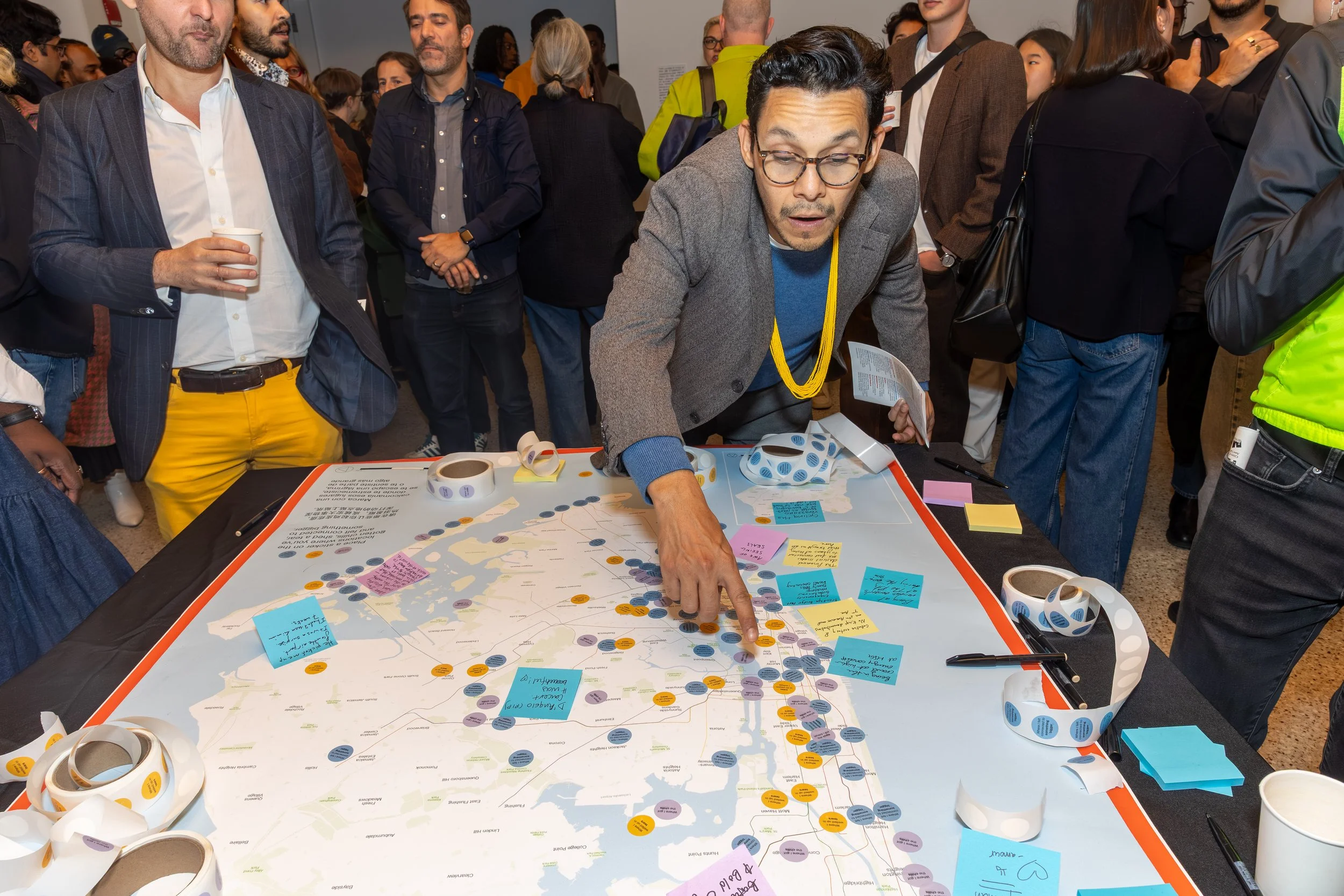
Participants mark locations on a shared map and briefly describe what happened there. Each dot represents a lived experience tied to a specific place.
As contributions accumulate, the map reveals spatial patterns in how people experience awe across a neighborhood or city. These patterns help identify which places support meaningful experiences and where there is potential to improve them.
What you gain from using this guide
Experiential
Awareness of Place: Participants reflect on the places where they experience awe.
Articulation of Experience: Writing a short description helps participants clarify what made the moment meaningful.
Collective Perspective: Seeing other contributions shows how different people experience the same place.
Recognition of Meaningful Places: Participants begin to notice which places contribute to connection, belonging, or inspiration.
Data + Insights
Spatial Data: The map shows where awe is experienced by people within the study area.
Identifiable Patterns: Clusters of dots and repeated descriptions reveal patterns of how places are experienced by visitors.
Local Knowledge: Participants contribute insights about places that may not appear in traditional urban analysis.
Input for Design and Planning: The results highlight the places and spatial qualities that enable people’s meaningful experiences.
Preparing
-
Choose the neighborhood, campus, city, or region you want to explore.
-
Create a large enough map that can hold many dots and notes, and that multiple people can contribute to. This will allow patterns to emerge over the course of the activity.
-
Select distinct colors to differentiate the ways one experiences awe. We like to start with the bodily sensations of awe to encourage people to remember where and how they experienced awe. You can adjust the categories to your research questions and context:
Where I felt connected to something bigger
Where I welled up in tears
Where I got the chills
Prepare matching colored sticky notes to pair with the dot stickers.
Gathering and seeing
-
Invite participants to mark the exact location where they experienced awe. Each dot represents a real moment tied to a specific place.
-
Ask participants to take a sticky note in the same color as their dot. They can write the location and a short description of what made the moment meaningful.
-
Step back and observe the map together. Look for clusters, gaps, and repeated themes. Discuss what the patterns reveal about where and how awe happens within a city or neighborhood.
Tool in action: In awe of NYC
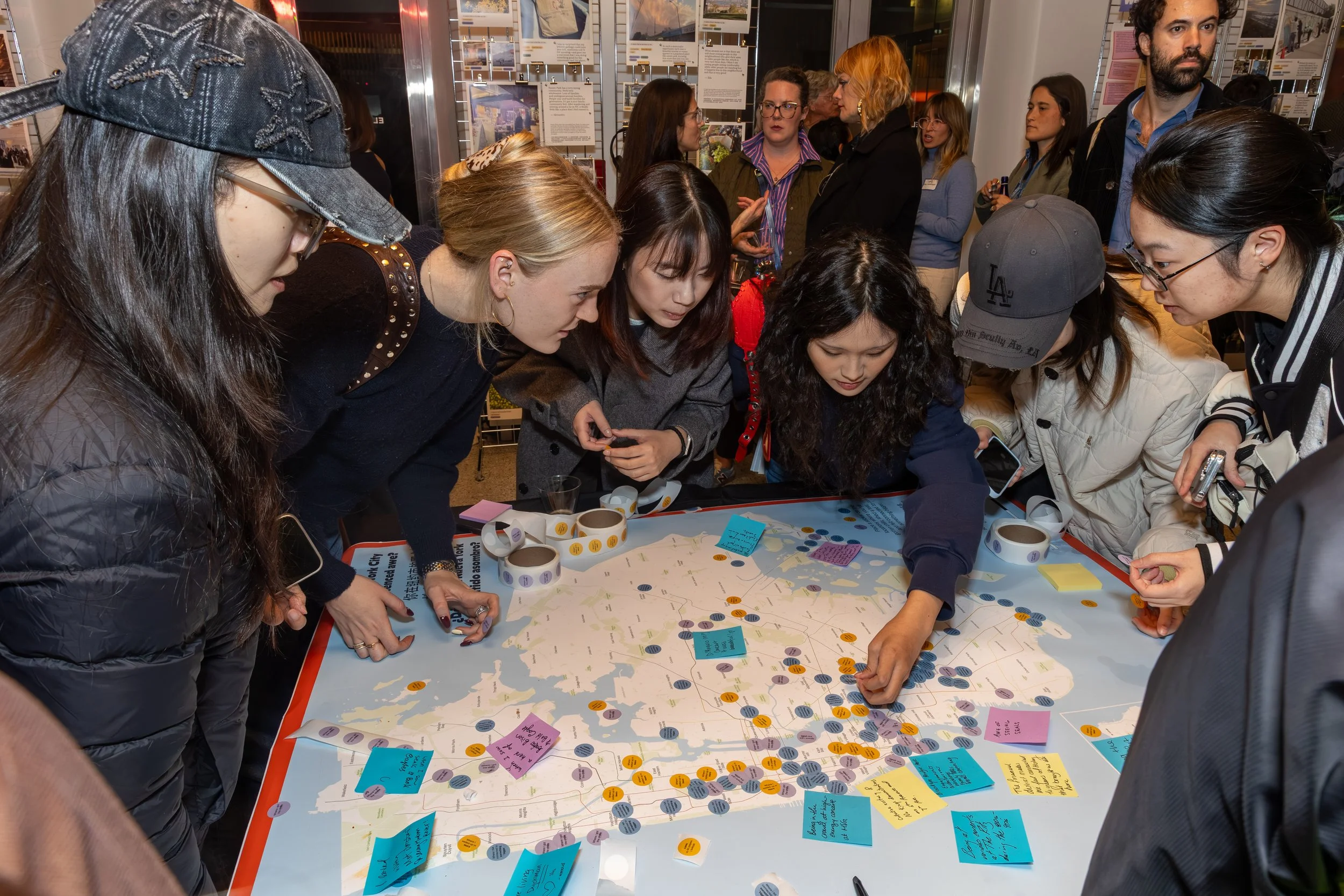
In New York City the Mapping Awe tool was used to gather stories and spatial data about where awe emerges across neighborhoods. By inviting New Yorkers to mark meaningful locations and describe moments of awe and wonder, the project revealed patterns in how people experience connection and wonder in the urban environment.