Listen to the Cities of Awe Podcast
Produced by The Science of Happiness Podcast at Greater Good Science Center.
Discover how public spaces can spark wonder, deepen belonging, and help us build more connected, meaningful cities.
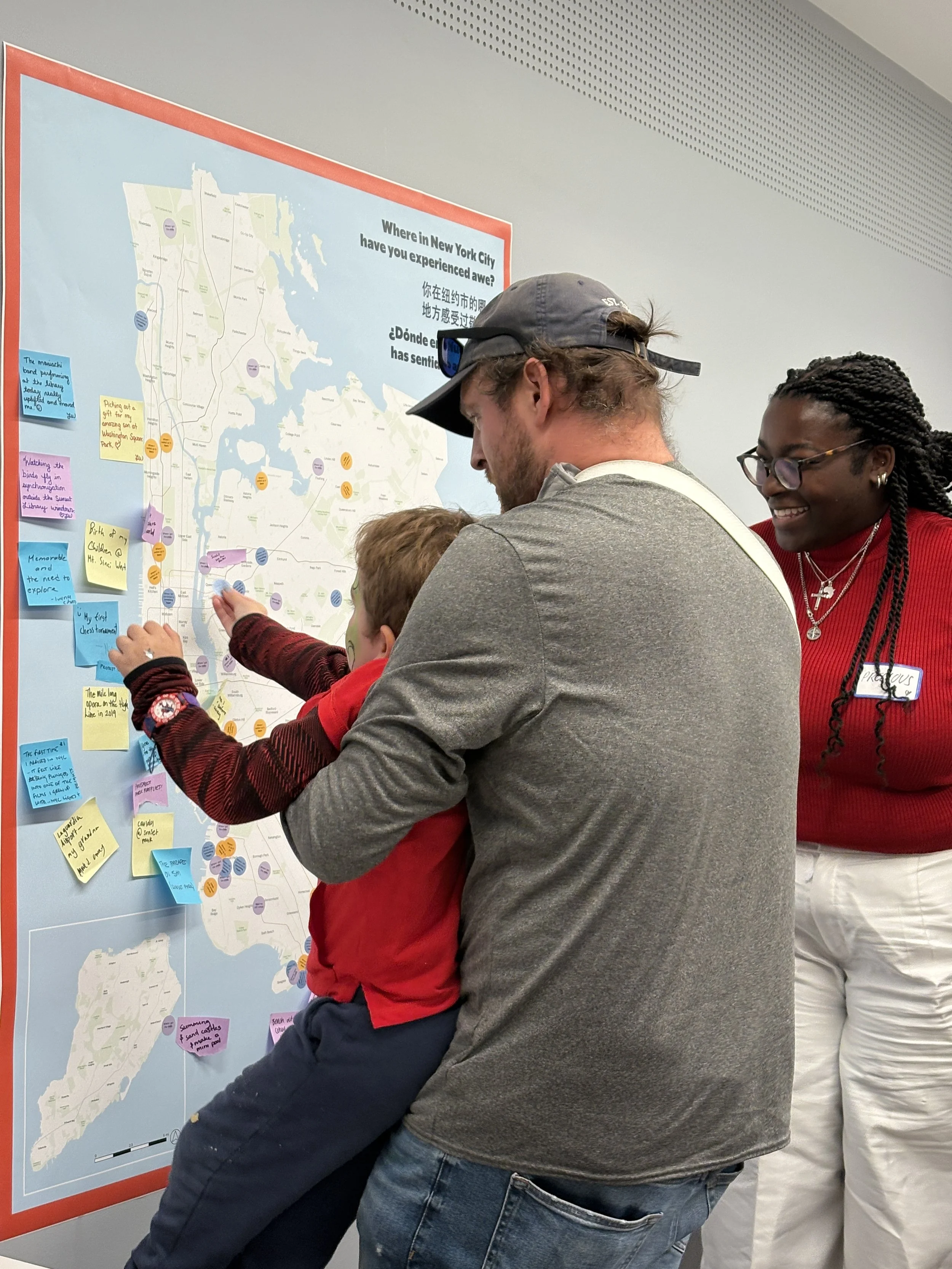
When was the last time you felt awe?
We feel awe when we encounter something larger than ourselves, in nature, in ideas, or in each other. It’s that pause when your breath slows, your perspective shifts, and your attention moves outward. You might feel it in your body before you can explain it: a moment of stillness or a sense of wonder. In those moments, we become a little less focused on ourselves and a little more open to the world around us.
What’s striking is that this isn’t an abstract feeling, it’s measurable through science. Research, including the work of Dacher Keltner, shows that awe calms the nervous system, reduces self-focused thinking, and strengthens our sense of connection to others. It can increase well-being, generosity, and curiosity, helping us feel part of something larger.
Discover more about the science of awe
ABOUT US
The Cities of Awe Lab advances the science of awe and public life to fuel our civic imagination.
We live in an age of fraying trust and deepening isolation. Too many of us move through our cities braced for impact: eyes down, shoulders tight, alone in a crowd. Screens can simulate connection, but they cannot replace it. We do not accept numbness as the price of modern life. We believe in something more human: coming together, being astonished, and feeling that we belong to something larger than ourselves. That feeling is awe.
Our goal is to bring together the science of emotion, the practice of city-making, and the lived experiences of communities around the world, to build a deeper understanding of how everyday moments of awe and wonder can help build more connected, resilient, and thriving cities.
Learn more about us